Visiting Birmingham Air Traffic Control
A group of BWPA members had the opportunity to visit Birmingham Air Traffic Control (ATC) on 14th January 2026.
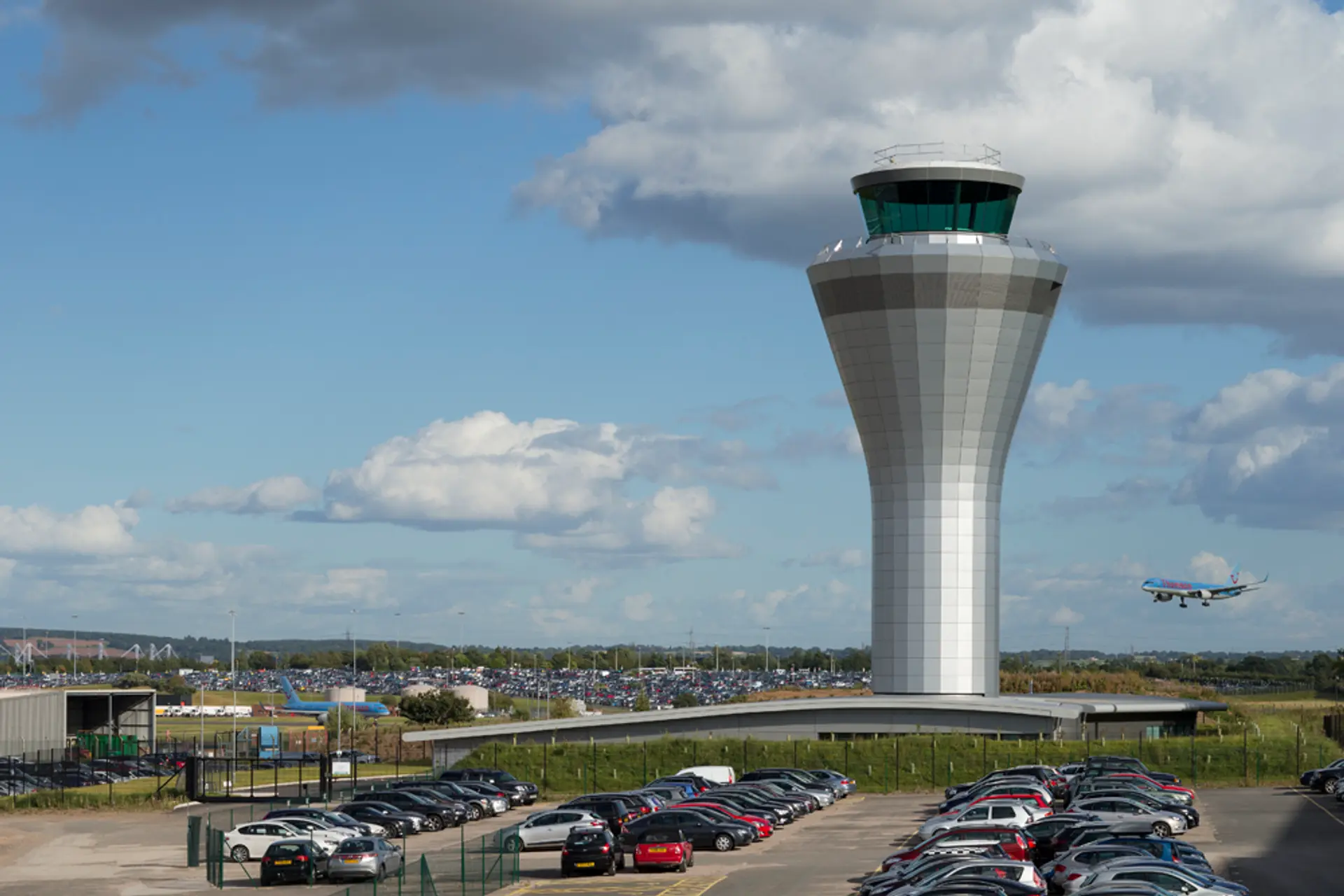
The ATC facility is situated on the opposite side of the runway to the terminal buildings, so we met in the car park and were greeted by our host, Alex. After signing in and a health and safety briefing, Alex gave a brief talk on the recent history of Birmingham Airport, including the runway extension to accommodate larger aircraft, and the relocation of ATC to enable controllers to have a better vantage point of the longer runway.
 We were then taken into the radar room and as it was a quiet time of day, Birmingham Radar was being staffed by one controller. At a busier time, they would also open up the Director frequency, to split the workload between two controllers. Alex explained what we could see on the radar screen, including the aircraft themselves, and the local airspace structure. He also described how the wind has a significant impact on the radar controller’s task, particularly when a controller is radar vectoring an aircraft; when an aircraft is under radar vectors the controller asks the pilot to fly specific headings, but the wind has an effect on the aircraft’s path, so the controller must take the wind into account with each instruction they give.
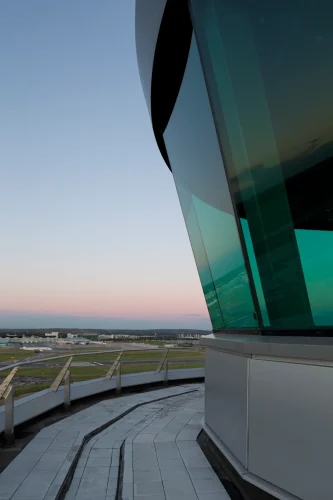
Next we were shown the Visual Control Room, VCR, at the very top of the tower. From here, Birmingham Tower and Birmingham Ground are provided, and the controllers give instructions to aircraft and airside vehicles by visually looking out of the window. A trainee controller was providing both Birmingham Tower and Ground combined, as it was a quiet time of day, and they were overseen by their ‘On the Job Training Instructor’ (OJTI). The weather observations also take place in the VCR, and are updated every 30 minutes, so this is what is broadcast on the ATIS and published by the Met Office as the Birmingham METAR.
Once downstairs again, we were shown around the ground floor, which contained many offices and a large rest room, plus the very important Air Traffic Engineering (ATE) department, whose task it is to ensure that all the communications equipment, radar and navigation aids (such as ILS) remain in correct working order, 24 hours a day, every day.
We rounded off the visit with a chat about the benefits of using Birmingham’s frequency monitoring code if flying outside, but within 5nm of, Birmingham’s controlled airspace – by setting a transponder code of 0010 and listening out on Birmingham Radar 123.980, this gives the controllers an opportunity to call you, should you stray towards the edge of their airspace, or if they need to contact you for any other reason.
An extremely enjoyable and informative visit.
Written by Claire Hatton, North West regional representative